RMT in Burnaby
Registered massage therapy for muscle pain, tension, stress, and injury recovery.
Book Registered Massage Therapy in Burnaby
RMT care may help with pain, muscle tension, injury recovery, sports or office strain, stress-related muscle tightness, and post-accident soft tissue symptoms. When appropriate, your plan may also discuss cupping or coordination with Chinese Medicine care. Your first visit includes health history, consent, assessment, treatment, and practical self-care guidance when useful.
Direct billing may be available for extended health, ICBC, and MSP supplementary benefits where eligible. If your injury is work-related, contact the clinic before booking so the front desk can confirm whether the right provider and billing pathway are available.
Current RMT Team
Cohen Parasiuk, Marc Fortin, and Anthony Artuso
Billing Support
Eligibility varies by claim and plan
Boundary Road Access
Free parking outside - bus routes 19, 25, and 116
Our Registered Massage Therapists in Burnaby
Meet the registered massage therapists in Burnaby at Phoenix Rehab, compare languages, and choose a booking path.
What Can Registered Massage Therapy Help With?
Our RMTs support patients with pain, tension, injury recovery, and everyday muscle strain at our Burnaby clinic.
Back Pain & Muscle Tightness
Back and hip muscles can tighten after long sitting, lifting, training, or injury. RMT care may help reduce soft tissue tension and support more comfortable movement.
Sports Injuries
Sprains, strains, and soft tissue recovery after training or competition. Your RMT can match treatment to your activity, recovery stage, and comfort level.
Motor Vehicle Accidents (ICBC)
Soft tissue pain, stiffness, and muscle guarding after a collision. ICBC massage therapy may be available when it is part of your approved recovery plan.
Work-Related Injuries
If your injury is work-related, contact the clinic before booking so the front desk can confirm whether the right provider and billing pathway are available.
Shoulder & Upper Back Tension
Shoulder and upper back tension can build from desk work, lifting, training, or stress. RMT care may support soft tissue comfort and mobility.
Chronic Pain
Persistent back, neck, shoulder, and joint discomfort that limits daily life. RMT care may help reduce tension, support movement, and make daily activities easier to manage.
Headaches & Migraines
Neck, shoulder, and upper back tension that can contribute to headaches. Your RMT can assess soft tissue patterns and use pressure that fits your tolerance.
Stress & Muscle Tension
Stress-related muscle tension, shallow breathing, and poor sleep can show up in the body. Massage therapy may support relaxation as part of a broader wellness plan.
Post-Surgical Recovery
Gentle techniques may support comfort, circulation, and mobility during later stages of healing. Your RMT works within your medical instructions and post-operative limits.
RMT, Physiotherapy, Chiropractic, or Acupuncture?
Different therapies can support different parts of recovery. Phoenix Rehab can help you choose a starting point and coordinate care when more than one service may fit.
Choose RMT when muscles and soft tissue are the main concern
Registered massage therapy may help with muscle tension, soft tissue pain, recovery after strain, stress-related tightness, and hands-on support after a crash.
Choose physiotherapy when movement and exercise planning matter
Physiotherapy can help when you need assessment, mobility work, strengthening, or a broader rehab plan for an injury or recurring pain.
Choose chiropractic when spine or joint assessment may fit
Chiropractic care may support back, neck, and joint concerns when hands-on assessment and movement guidance are useful.
Choose acupuncture for another pain or stress-support pathway
Acupuncture may support pain, tension, sleep, and stress-related concerns as part of a broader care plan.
What Techniques Are Used in Massage Therapy?
Our RMTs draw from a wide range of massage techniques — selecting approaches based on your specific condition, goals, and comfort level.
Fully Registered RMTs
All therapists are regulated by the College of Complementary Health Professionals of BC (CCHPBC)
Hands-On Techniques
Deep Tissue Massage
Targets deeper layers of muscle and connective tissue for lasting structural relief.
Swedish Massage
Gentle, flowing strokes to promote circulation, ease tension, and induce relaxation.
Targeted Soft Tissue
Myofascial Release
Releasing tension in connective tissue to restore mobility and reduce referred pain.
Trigger Point Therapy
Sustained pressure on knots that refer pain to other areas, breaking the pain cycle.
Cupping for muscle tension
Cupping may be discussed when suction-based soft tissue support fits your goals, skin sensitivity, and health history.
Specialized Treatments
Sports Massage
Treatments designed for athletes — injury prevention, faster recovery, and performance support.
Prenatal and postnatal massage
Positioning, pressure, and consent are adapted for pregnancy and after birth, with care focused on comfort and support.
Rehabilitation & Wellness
Injury Rehabilitation
Focused massage to support healing, reduce scar tissue, and restore function after injury.
Stress Relief & Stretching
Calming techniques and assisted mobilization to ease chronic tension and improve flexibility.
How Does Massage Therapy Work?
A clear, patient-centred approach to support safe treatment every visit.
First Visit, Consent & Treatment Plan
Your first visit begins with a health history, a discussion of your goals, and a hands-on assessment. Your RMT explains the treatment plan, confirms consent, and adapts the session to your comfort and coverage needs.
Treatment Matched to Your Needs
Your RMT may use techniques such as Swedish massage, myofascial release, trigger point work, stretching, or lighter relaxation-focused care. Pressure and positioning are adjusted throughout the session.
Progress, Self-Care & Direct Billing
Follow-up visits can focus on symptom changes, mobility, and practical self-care. Our front desk can help with eligible extended health, ICBC, and MSP supplementary benefit billing steps where your plan allows.
What Should You Expect in a Massage Session?
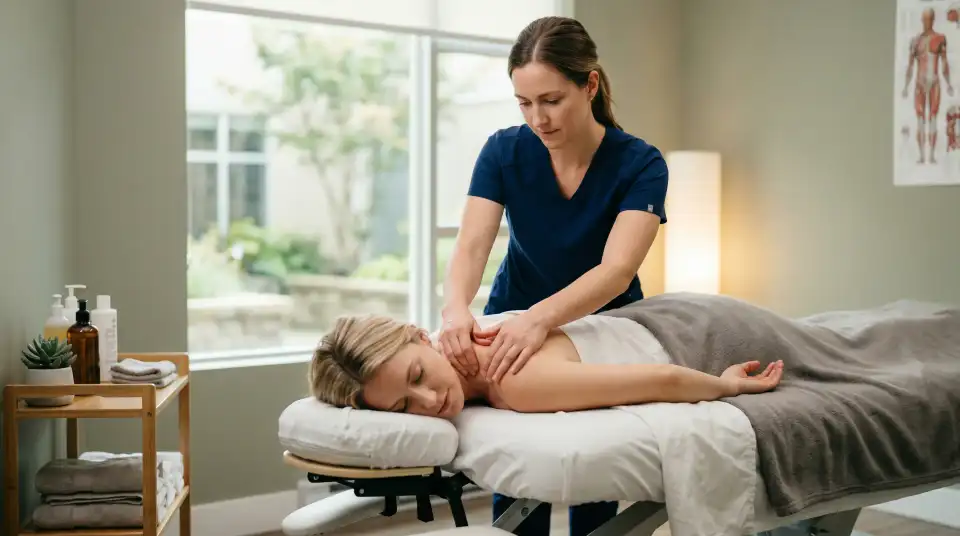
Registered Massage Therapy (RMT) in Burnaby is hands-on care from a regulated health professional. Your RMT can assess muscle, joint, and soft tissue concerns, explain a treatment plan, and adapt pressure and techniques to your comfort.
Session Details
Initial sessions typically last 60 minutes. Your RMT will take a full health history, assess your condition through hands-on evaluation, discuss your goals, and begin treatment — all in the same visit.
Follow-up sessions are available in 30, 45, or 60-minute formats depending on your condition and goals. Your RMT will recommend the appropriate length based on how your body is responding to treatment.
Techniques are always adapted to your comfort and preferences. Whether you prefer gentle relaxation massage or deep tissue pressure, your RMT adjusts throughout the session and checks in regularly to ensure the treatment feels right.
Some patients notice short-term ease after one visit, while longer-standing concerns usually need consistent care. Your RMT will explain what progress to watch for and adjust the plan as your body responds.
All sessions are conducted in a professional, private, and comfortable treatment room. Your RMT will explain everything before and during the session, and you are always in control of what happens — you can request changes to pressure, position, or focus area at any time.
Who Can Benefit from Registered Massage Therapy?
Massage therapy helps far more than sore muscles. People of all ages and activity levels seek RMT treatment for pain relief, injury recovery, stress management, and preventive wellness. Here are some of the groups we commonly help at our Burnaby clinic.
Office Workers & Remote Professionals
Prolonged sitting at a desk or laptop creates chronic tension patterns in the neck, shoulders, and upper back. Over time, these patterns can lead to persistent headaches, reduced mobility, and referred pain into the arms and hands. Therapeutic massage releases built-up tension, improves circulation to overworked muscles, and helps reset postural habits — so you can work more comfortably and with less pain.
Athletes & Active Individuals
Training, competition, and recreational sports place repeated demands on muscles and connective tissue. Sports massage helps maintain flexibility, speeds recovery between workouts, and addresses micro-injuries before they become major problems. Whether you run marathons or play weekend soccer, regular RMT sessions help you perform better and recover faster.
Seniors & Aging Adults
Age-related muscle stiffness, reduced circulation, and joint pain respond well to gentle massage techniques. Treatment focuses on maintaining mobility, reducing discomfort from arthritis and other chronic conditions, and improving sleep quality. Our RMTs use appropriate pressure and positioning to ensure comfort and safety for older adults.
Motor Vehicle Accident Survivors
Massage therapy may support people managing muscle tension and soft tissue injuries after a car accident. ICBC coverage may be available for approved claims.
Pregnancy and postnatal support
Pregnancy and early postnatal life can place unique demands on the body, including lower back pain, hip discomfort, swollen legs, and disrupted sleep. Prenatal and postnatal massage uses adapted positioning and pressure to support comfort through each stage.
People Managing Stress & Anxiety
Chronic stress manifests physically as muscle tension, headaches, poor sleep, and fatigue. Massage therapy activates the parasympathetic nervous system — lowering cortisol, slowing heart rate, and promoting deep relaxation. Many patients use regular massage sessions as part of their mental health and wellness routine alongside counselling or other supports.
How Long Does Massage Therapy Take to Work?
The length and frequency of massage therapy depends on your specific condition, how long it has been present, its severity, and your personal treatment goals. Here is a general guide to what you can expect.
Sessions 1–3: Assessment & Acute Relief
Your RMT performs a thorough assessment, identifies the primary areas of concern, and begins hands-on treatment. Most patients notice some improvement in pain, tension, and mobility within the first 1–3 sessions. For acute conditions like fresh injuries or severe muscle spasms, sessions are typically weekly.
Weeks 3–8: Progressive Recovery
Once initial symptoms improve, treatment shifts to addressing deeper tissue restrictions, movement patterns, and contributing factors. Your RMT may incorporate stretching protocols, self-care homework, and adjusted techniques as your body responds. Sessions are typically weekly to bi-weekly during this phase.
Monthly+: Maintenance & Wellness
After your primary concerns are resolved, many patients transition to periodic maintenance sessions (monthly or as needed) to manage everyday stress, prevent recurring tension patterns, and maintain the gains achieved during active treatment.
Simple tension or acute muscle strain may resolve in 2–4 sessions. Chronic pain conditions, repetitive strain injuries, or post-accident recovery typically require 6–12 weeks of consistent treatment before transitioning to maintenance. Your RMT will provide a specific treatment plan and expected timeline during your first visit. We track your progress at every appointment and adjust the plan accordingly — your recovery pace drives the schedule, not a fixed number of visits.
Massage Therapy FAQs
What Is the Difference Between an RMT and a Spa Massage?
A Registered Massage Therapist (RMT) is a regulated health professional who has met the entry-to-practice requirements of BC's massage therapy regulator and is trained in anatomy, physiology, pathology, and clinical massage techniques. RMTs perform clinical assessments, develop treatment plans, and treat specific conditions. Spa massage focuses on relaxation and general well-being. At Phoenix Rehab, all massage therapy is provided by fully licensed RMTs regulated by the College of Complementary Health Professionals of BC (CCHPBC), which means your sessions can be direct billed to insurance.
How Often Should You Get a Massage?
It depends on your condition and goals. For acute injuries or chronic pain, weekly sessions are common in the initial phase. As symptoms improve, frequency typically reduces to bi-weekly, then monthly. For general wellness and stress management, many patients find monthly sessions sufficient to maintain their results. Your RMT will recommend a schedule matched to your specific needs and progress.
Is Massage Therapy Covered by Insurance in BC?
Registered Massage Therapy is covered by many extended health insurance plans in British Columbia. ICBC may cover massage therapy for eligible motor vehicle accident claims, and MSP supplementary benefits may apply for eligible patients. For work-related injuries, contact the clinic before booking so the front desk can confirm whether the right provider and billing pathway are available.
Do I Need a Referral to See an RMT in BC?
No. In British Columbia, you can see a Registered Massage Therapist directly without a doctor's referral. However, some extended health plans, ICBC situations, or MSP supplementary benefits may require paperwork before coverage applies. Our front desk team can help you determine what is needed for your insurance situation.
Should Massage Therapy Be Painful?
No. While some therapeutic techniques (like deep tissue or trigger point therapy) may cause temporary discomfort, massage should never be painful. Your RMT will check in throughout the session and adjust pressure based on your feedback. A good rule of thumb: you should be able to breathe normally and relax during treatment. If anything feels too intense, tell your therapist — there are always alternative techniques that can achieve similar results with less discomfort.
What Should I Wear to a Massage Therapy Appointment?
Wear whatever is comfortable for you. During the session, you will be properly draped with sheets at all times — only the area being treated is exposed. Most patients undress to their comfort level. Your RMT will step out of the room while you get settled on the treatment table. If you prefer to remain partially clothed, your therapist can adapt techniques accordingly. Your comfort and privacy are always the priority.
Is Massage Therapy Covered by Insurance?
Coverage depends on your claim or benefits plan.
Direct billing may be available for extended health, ICBC, and MSP supplementary benefits where eligible. For work-related injuries, contact the clinic before booking so we can confirm the right billing pathway.
Not sure what your plan covers? Call 778-379-9888 and our team can help check what may apply before your first visit.
Meet Your RMT Team
Our registered massage therapists combine clinical experience with hands-on care.
Ready to Feel Better?
Book registered massage therapy at our Burnaby clinic for hands-on care matched to pain, tension, injury recovery, or stress-related muscle concerns.
100B – 3300 Boundary Rd, Burnaby | 778-379-9888
Serving Nearby Neighbourhoods
Phoenix Rehab is on Boundary Road, an easy trip from these Burnaby and East Vancouver neighbourhoods.