
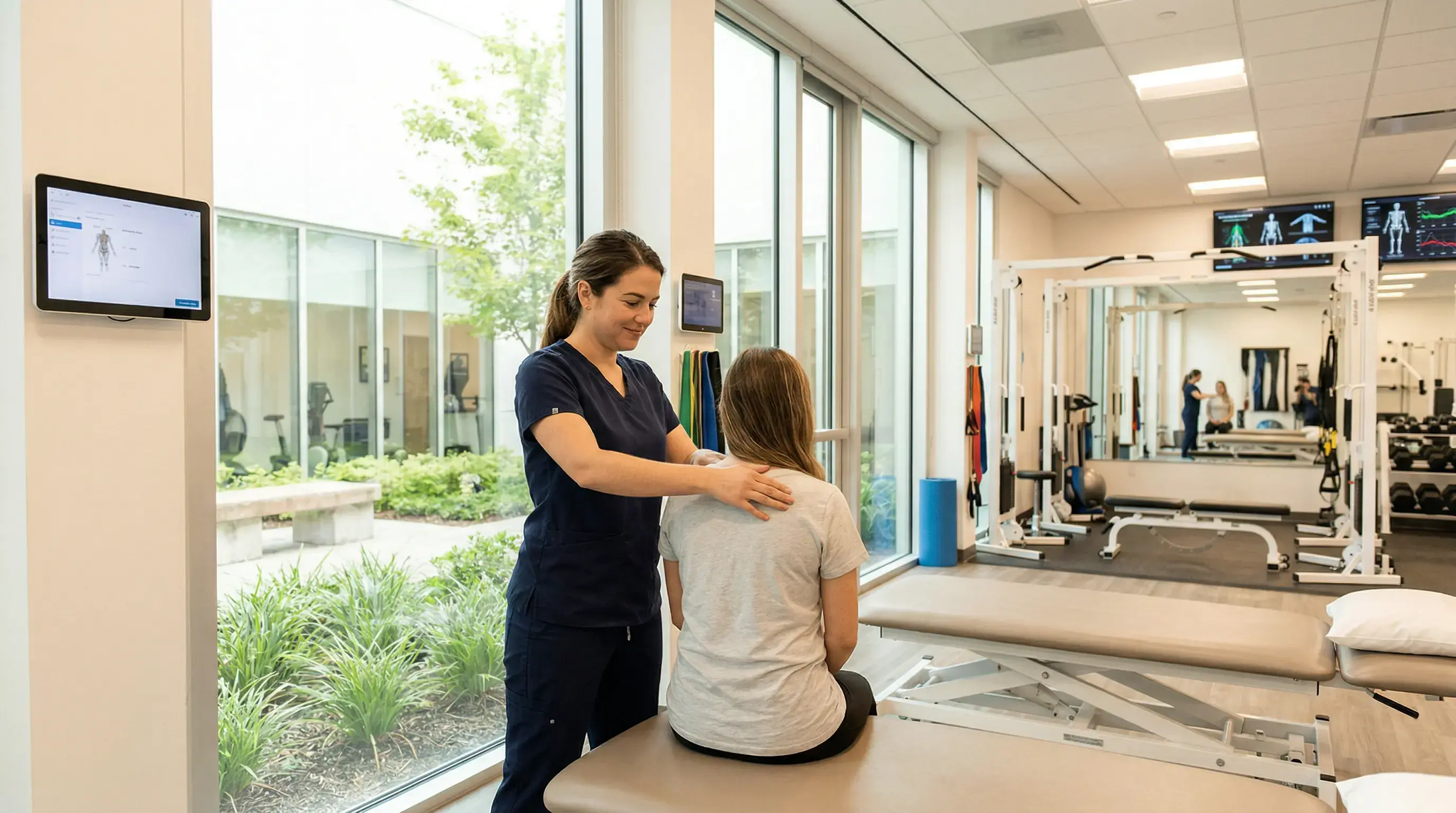
Shockwave Therapy in Burnaby
Part of a physiotherapy visit, for selected tendon, heel, elbow, shoulder, and knee problems.
A targeted part of physiotherapy care, not a separate appointment type
Extracorporeal shockwave therapy, often shortened to ESWT, uses short acoustic pulses applied over a specific painful or overloaded area. In physiotherapy, it is most often considered for stubborn tendon and soft tissue problems that have not settled with rest alone, especially when the goal is to support better tolerance to loading, walking, gripping, training, or daily movement.
At Phoenix Rehab, shockwave therapy is delivered as part of a physiotherapy visit. That matters because the treatment is not chosen from a menu before assessment. Your physiotherapist first checks your history, symptoms, irritability, movement, strength, and goals. If ESWT may fit, it can be paired with education, exercise progression, manual therapy, pacing, footwear or activity advice, and a plan for what to do between visits.
Shockwave therapy is evidence-informed, but it is not a promise of a quick result. Tendon and soft tissue problems are often influenced by load, sleep, work demands, sport volume, footwear, strength, medication history, and how long symptoms have been present. ESWT can support the plan, but the full plan still needs to match the person in front of us.
Inside physiotherapy
ESWT is used within a regular physiotherapy appointment, so assessment, treatment, exercise, and follow-up stay connected.
Matched to the area
Your physiotherapist applies ESWT only when the painful area, symptom pattern, and treatment goals support that choice.
Reassessed over time
Your plan is reviewed based on comfort, movement, activity tolerance, and whether your daily function is changing.
Conditions shockwave therapy may support
ESWT is most often discussed for persistent tendon and soft tissue concerns. Your physiotherapist will confirm whether it fits your assessment.
Plantar fasciitis and heel pain
Shockwave therapy may support heel pain plans when the plantar fascia or surrounding tissue remains sensitive with standing, walking, or first steps in the morning.
Tennis elbow and golfer's elbow
ESWT may be considered for persistent elbow tendon pain that affects gripping, lifting, racquet sports, gym work, or repetitive work tasks.
Calcific shoulder tendinopathy
For selected shoulder presentations, ESWT may be part of a plan that also looks at range of motion, strength, sleep position, and activity load.
Patellar and Achilles tendinopathy
Shockwave may support lower-limb tendon rehab when jumping, running, stairs, hills, or training volume keeps symptoms irritated.
Shin splints and lower-leg overload
ESWT may fit some lower-leg overload plans alongside calf strength, footwear review, running progression, and training-load changes.
Other chronic tendon issues
Some chronic tendon problems may benefit from a broader physiotherapy plan that uses ESWT only when your presentation supports it.
What happens during a shockwave physiotherapy visit
The appointment starts like physiotherapy: assessment first, then a treatment choice that fits what your body is showing that day.
01
Assessment first
Your physiotherapist reviews your symptoms, activity demands, medical history, irritability, movement, strength, and what has or has not helped so far.
02
Fit and comfort check
If ESWT may be appropriate, your physiotherapist explains what it should feel like, checks your comfort, and confirms the treatment area with you.
03
ESWT as one part
Shockwave therapy is applied to the target area during the visit. The intensity can be adjusted, and you can ask to pause at any point.
04
Plan after treatment
You leave with guidance for activity, loading, exercises, soreness expectations, and when to reassess whether ESWT should continue.
Delivered by Phoenix Rehab physiotherapists
Awnee Pandey, Reshma Mehta, and Ali Shafiei provide shockwave treatment within physiotherapy appointments at Phoenix Rehab.
Awnee Pandey
Physiotherapist
Awnee provides ESWT within physiotherapy visits when your assessment and goals support it.
Reshma Mehta
Physiotherapist
Reshma provides ESWT as part of physiotherapy care and keeps the plan tied to movement, function, and home guidance.
Ali Shafiei
Physiotherapist
Ali provides ESWT within physiotherapy appointments when it fits the clinical picture and your treatment goals.
Cost and coverage
Shockwave therapy at Phoenix Rehab is delivered within a regular physiotherapy appointment at the standard physiotherapy rate. There is no separate shockwave fee and no add-on charge for ESWT.
If your extended health plan covers physiotherapy, that coverage applies as usual to the physiotherapy appointment. Coverage still depends on your specific plan, remaining benefits, provider rules, and direct-billing setup.
ICBC and WorkSafeBC claims follow the existing physiotherapy claim rules. Bring your claim details, and our front desk can help confirm what applies before your appointment. These are physiotherapy visits, and direct billing may be available for ICBC, WorkSafeBC, MSP, and Extended Health.
How we decide if ESWT fits
Shockwave therapy is not used for every painful area. Your physiotherapist may recommend it when symptoms, tissue irritability, health history, and goals make it a reasonable part of the plan. They may also recommend starting with education, exercise, manual therapy, or load changes first.
If ESWT is used, the goal is to support a bigger rehab plan. That plan usually includes progressive loading, activity pacing, and clear signs to track, such as walking tolerance, grip tolerance, training response, morning pain, or ability to work.
Learn how ESWT may fit common tendon problems
Plantar fasciitis and shockwave therapy
A practical guide to heel pain, load management, and when ESWT may be considered inside a physiotherapy plan.
Read guideTennis elbow and shockwave therapy
How persistent elbow tendon pain is assessed, where ESWT may fit, and why grip and load planning still matter.
Read guideShockwave therapy FAQ
Does shockwave therapy hurt?
It can feel uncomfortable, sharp, or intense over a sensitive area, but it should stay tolerable. Your physiotherapist can adjust the intensity and you can ask to pause at any time.
How many shockwave sessions will I need?
There is no fixed number. Your physiotherapist will usually suggest a starting plan, reassess your response, and decide with you whether ESWT should continue, change, or stop.
Is shockwave covered by extended benefits?
Shockwave is delivered within a physiotherapy appointment at the standard physiotherapy rate. Extended health plans that cover physiotherapy apply as usual, subject to your plan rules.
Can shockwave be used during an ICBC or WorkSafeBC claim?
It may be used within physiotherapy when your claim pathway, provider setup, and assessment support it. ICBC and WorkSafeBC claims follow the existing physiotherapy claim rules.
What conditions can shockwave therapy support?
ESWT may be considered for selected plantar fasciitis, tennis or golfer's elbow, calcific shoulder tendinopathy, patellar or Achilles tendinopathy, shin splints, and chronic tendon concerns.
What should I do after shockwave therapy?
Your physiotherapist will explain activity, exercise, soreness expectations, and what to avoid for your specific case. Mild soreness can happen, so the plan should match your response.
Plan Related Care
Use these pages to understand how shockwave therapy connects with physiotherapy, tendon pain, and rehab planning.
Book a physiotherapy visit for shockwave therapy
Choose a physiotherapy appointment and mention shockwave therapy if you want to know whether ESWT fits your assessment.
Serving Nearby Neighbourhoods
Phoenix Rehab is on Boundary Road, an easy trip from these Burnaby and East Vancouver neighbourhoods.